

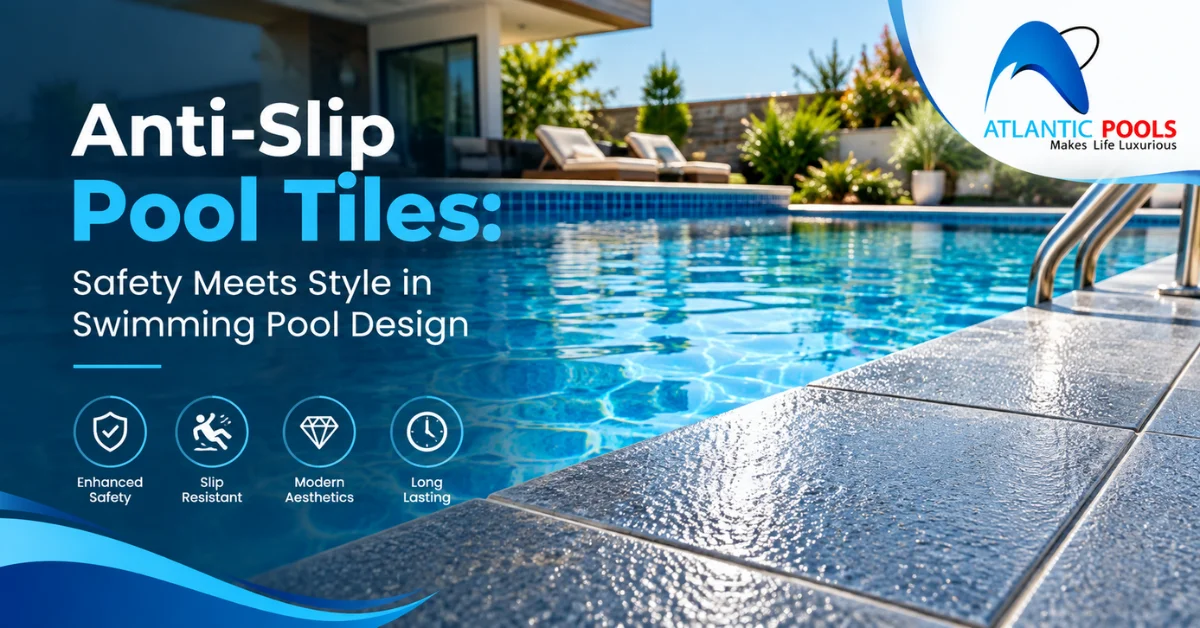
Most pool accidents we hear about don’t actually happen in the water. They happen on the steps, the shallow-end ledge, or the wet deck right beside the pool, usually because the tile there looked great in the showroom but had almost no grip once it got wet. Anti-slip pool tiles solve exactly this problem, and the good news is you don’t have to trade style for safety to get it right.
We get asked about this constantly during the tile selection stage of a project, usually right after a client has already fallen in love with a glossy finish that turns out to be genuinely risky around water.
Slip resistance isn’t guesswork, it’s actually measured. In North America, tile is rated using DCOF, or Dynamic Coefficient of Friction, and the ANSI A137.1 standard requires a minimum DCOF of 0.42 for any tile meant to be walked on wet. That’s the bare minimum though, not the target for a pool.
What the Numbers Actually Mean
For pool decks specifically, industry guidance recommends aiming well above that 0.42 floor, closer to 0.60 or higher for barefoot, wet-area surfaces like pool steps and coping. You’ll also see the European R-rating system on a lot of tile spec sheets, R9 through R13, where higher numbers mean more grip. For pool areas, R11 is generally treated as the minimum, with R12 preferred right at the water’s edge where feet are wettest.
Where It Matters Most in a Pool
Not every surface around a pool needs the same level of grip, and understanding that actually helps you balance safety with design rather than over-specifying everything.
Steps and the shallow-end ledge see the most bare, wet feet at once, which makes them the highest priority for a strong slip rating. Coping and the immediate deck perimeter come next, since that’s where people are stepping in and out constantly. The pool interior below the waterline matters less for slip rating specifically, since water itself changes how weight and grip behave, but texture still helps on submerged steps and benches.
If you want a fuller picture of what belongs in a well-equipped, safety-conscious pool overall, our pool safety equipment guide covers more than just tile.
Slip Rating by Zone
| Pool Area | Recommended Minimum | Why |
| Steps and shallow ledge | R12 / DCOF 0.60+ | Highest bare-foot, wet-foot traffic |
| Coping and deck edge | R11-R12 / DCOF 0.60+ | Constant in-and-out foot traffic |
| Pool deck (general) | R11 / DCOF 0.42-0.60 | Moderate wet exposure |
| Submerged steps/benches | Textured finish recommended | Grip still matters underwater |
Style Doesn’t Have to Suffer
This is the part people worry about most, and it’s the part that’s actually improved a lot. Textured glass mosaic now comes in finishes that keep the shimmer people want while adding just enough surface texture to meet a proper slip rating. Matte porcelain has come a long way too, offering the clean, premium look people associate with polished tile without the glass-like surface that makes polished finishes so risky when wet.
If you already went through our guide to choosing pool tile materials, slip resistance is really just one more filter to apply on top of the material decision you’ve already been thinking through, not a separate, competing choice.
Getting the Installation Right
A correctly rated tile can still underperform if it’s installed badly. Standing water on a poorly sloped deck defeats even the best slip rating, since a puddle behaves the same regardless of what’s underneath it. Grout choice matters here too, wider grout lines with textured grout actually add a meaningful amount of grip between tiles, especially on deck areas. This is the kind of detail that’s easy to miss unless the construction team is specifically planning for drainage and slope from day one, not just laying tile on a flat surface and hoping for the best.
Keeping It Grippy Over Time
Slip resistance isn’t a one-time decision either. Textured surfaces trap more dirt and body oils than smooth tile, which can actually reduce grip over time if the surface isn’t cleaned regularly. We cover this in more detail in our tile maintenance guide, but the short version is that a textured, slip-rated tile still needs regular brushing to keep performing the way it was rated to.
How We Handle This
We factor slip rating into every tile recommendation we make, not as an afterthought once the design is finalised, but as part of the same conversation as colour and finish. You can read more about how our team approaches projects on our about us page.
Contact Us Now To Get A Free Quote!
Final Thoughts
Anti-slip pool tiles aren’t a compromise, they’re just a smarter way to pick tile you were going to choose anyway. Checking the DCOF or R-rating before you commit to a finish costs nothing and takes five minutes, and it’s the difference between a pool that looks great and one that also keeps people upright on the way in and out.
If you’re planning tile for a new pool or thinking about redoing your deck, get in touch with us and we’ll walk you through options that work for both.
FAQs
What is a good slip rating for pool tile?
R11 is generally the minimum recommended for pool areas, with R12 preferred right at the water’s edge. In DCOF terms, aim for 0.60 or higher on pool decks and steps, well above the 0.42 baseline required for general wet indoor floors.
Do anti-slip pool tiles look different from regular tile?
Not as much as people expect. Textured glass mosaic and matte porcelain both offer strong slip resistance while still giving you the premium look most people want around a pool.
Where around a pool needs the highest slip resistance?
Steps and the shallow-end ledge see the most bare, wet foot traffic and should get the highest rating, followed closely by the coping and immediate deck perimeter.
Does grout affect slip resistance?
Yes. Wider, textured grout lines add real grip between tiles, particularly on deck surfaces, and shouldn’t be an afterthought when planning a slip-resistant layout.
Do anti-slip tiles need different maintenance?
Textured surfaces trap more dirt and oils than smooth tile, so they need regular brushing to keep their full grip over time rather than a one-time installation and forget approach.
Does Atlantic Pools factor slip resistance into tile recommendations?
Yes. We build slip rating into the tile conversation from the start, alongside colour and finish, rather than treating it as a separate add-on decision.