

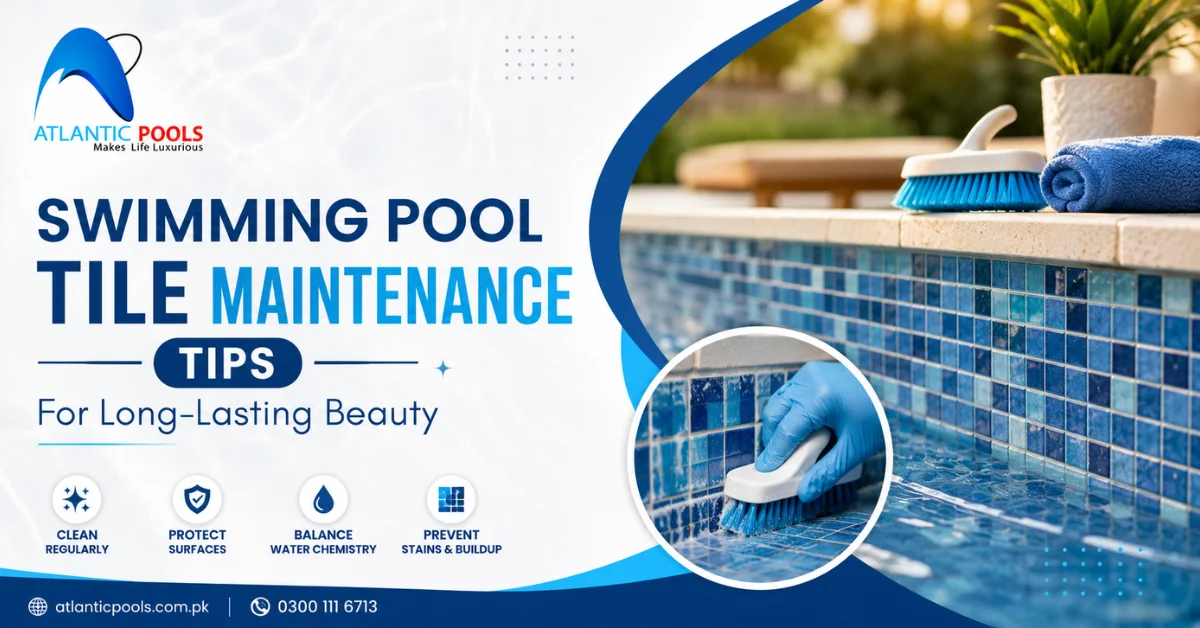
Tile is usually the last thing people think about once the pool is finished and the excitement of the first swim wears off. Then eighteen months later, that chalky white ring shows up at the waterline, or the grout starts looking dull no matter how much it’s scrubbed, and suddenly swimming pool tile maintenance is the only thing anyone’s thinking about. A little regular care from day one avoids almost all of that, whether your pool is finished in glass mosaic, crystal, or marble tile work.
If you already went through the process of choosing the right tile material for your pool, this is the part that actually protects that investment. Good material choice buys you durability. Regular maintenance is what determines whether you actually get to use it.
Water chemistry plays a bigger role in tile condition than most people realise. According to the CDC’s guidance on pool chemical safety, water balance isn’t just a swimmer-comfort issue, it directly affects surfaces and equipment too, which is exactly why calcium buildup and grout breakdown so often trace back to pH that’s drifted out of range rather than the tile itself being low quality.
Why Tile Maintenance Matters More Than People Expect
Tile doesn’t fail because it’s a bad material, it fails because minerals in the water slowly build up on the surface and in the grout lines until they start eating away at both. This is really the whole point of swimming pool tile maintenance, catching that buildup early instead of letting it compound for years. A pool with a properly sized and maintained filtration system already has a head start here, since clean, well-circulated water carries far less of the debris and organic buildup that ends up staining tile over time.
The Weekly Habits That Actually Matter
Brushing the waterline once a week is the single most effective habit in any swimming pool tile maintenance routine. It sounds almost too simple, but most calcium buildup starts as a thin film that brushes off easily, and turns into a stubborn crust only after weeks of being left alone. Pair that with keeping pH in the 7.2 to 7.6 range, since water outside that range is what actually causes minerals to precipitate onto the tile surface in the first place.
A few extra habits make a real difference too. Wiping down the waterline after heavy bather traffic keeps oils and sunscreen residue from baking onto the tile surface in the heat. Checking calcium hardness alongside pH, not just chlorine, catches the root cause before it ever shows up as visible scale.
Dealing With Calcium Buildup
If you’re already looking at a chalky white ring, the fix depends on what you’re dealing with. Lighter calcium carbonate deposits usually respond well to a simple vinegar and water solution left to sit for a few minutes before scrubbing. Heavier, greyish calcium silicate buildup is more stubborn and typically needs a proper acid wash or professional bead blasting, since scrubbing harder on that type of scale tends to scratch the tile and grout rather than remove it.
Practical Tip: test a small, hidden section of tile before using any acid-based cleaner across the whole waterline. Some tile finishes react differently, and it’s a lot cheaper to test one tile than to damage an entire waterline band.
Maintenance Schedule at a Glance
| Frequency | Task |
| Weekly | Brush waterline, check pH and chlorine levels |
| Monthly | Inspect grout lines for cracking or discolouration |
| Seasonally | Deep clean tile surface, check for early calcium buildup |
| Annually | Professional inspection of tile, grout, and sealant condition |
Grout Needs Attention Too
Tile gets most of the attention, but grout is usually where problems actually start. Cement-based grout is more porous than the tile itself, which means it absorbs water and chemicals faster and breaks down sooner. If grout lines start looking chalky, crumbly, or discoloured, that’s usually the early warning sign worth addressing before it turns into loose tiles. Resealing grout every couple of years, especially around marble or natural stone finishes, keeps this from becoming a bigger repair.
When to Call a Professional
Some things are worth handling yourself, and some aren’t. Deep calcium silicate buildup, cracked or loose tiles, and any grout failure large enough to expose the substrate underneath are all situations where it’s worth calling in a professional pool construction team rather than experimenting further. Pushing too hard with acid or abrasive tools on a problem that needs professional bead blasting usually causes more damage than the original buildup did.
How We Handle Maintenance
We keep spare parts and equipment in stock specifically so maintenance issues don’t turn into long waits, and our service team is reachable whenever something needs attention rather than only during a scheduled visit. You can read more about how we approach ongoing pool care on our about us page.
Contact Us Now To Get A Free Quote!
Final Thoughts
Swimming pool tile maintenance isn’t complicated, it’s mostly about staying ahead of small problems before they become expensive ones. A weekly brush, balanced water chemistry, and attention to grout condition will keep most pools looking new for well over a decade. When something does need more than a weekly routine can fix, it’s worth calling in help before a small fix turns into a full retiling job.
If your tile needs attention or you’re not sure what you’re dealing with, get in touch with us and we’ll take a look.
FAQs
How often should I clean my swimming pool tile?
Brushing the waterline weekly is enough for most pools. A deeper clean once a season, along with a professional inspection once a year, catches problems before they become serious.
What causes calcium buildup on pool tile?
Calcium buildup happens when pH or calcium hardness drifts out of the recommended range, causing minerals in the water to precipitate onto the tile surface, most often at the waterline where evaporation concentrates them.
Can I remove calcium buildup myself?
Light calcium carbonate deposits usually respond to a vinegar and water solution. Heavier, greyish calcium silicate buildup is harder to remove safely and often needs professional treatment like bead blasting.
How do I know if it’s a grout problem or a tile problem?
If the tile itself looks fine but the lines between tiles are chalky, crumbling, or discoloured, that’s a grout issue. Left unaddressed, grout failure eventually leads to loose or cracked tiles.
Is it safe to use acid-based cleaners on pool tile?
It can be, but only with proper dilution and ventilation, and after testing on a small hidden area first. Different tile finishes react differently, so it’s worth being cautious rather than assuming one method works everywhere.
Does Atlantic Pools offer tile maintenance services?
Yes. We handle tile inspection, cleaning, and grout care as part of our ongoing maintenance support, alongside general pool equipment servicing.