

Tile is the one finish on your pool that touches everything — the water, the sunlight, bare feet, and years of chemical exposure — all at once. Get it right, and your pool looks as good in year fifteen as it did on day one. Get it wrong, and you’re looking at cracked grout, faded color, and a resurfacing job long before it should be necessary. That’s why choosing the right swimming pool tiles is one of the most consequential decisions in any pool project, residential or commercial.
This guide walks through the main types of swimming pool tiles, how each one performs under real pool conditions, and how to choose the right material based on your budget, design goals, and how long you expect your pool to last without needing major rework.
Why Tile Material Matters for Pool Longevity
Pool tile isn’t just decorative — it’s a functional barrier between your pool’s structure and constant water exposure. The right swimming pool tiles resist chemical erosion from chlorine and pH-balancing agents, hold their color under UV exposure, and stay slip-resistant even when wet. The wrong material, chosen purely for upfront cost or looks, tends to show its weaknesses within two or three seasons: fading, cracking, or grout lines that let water seep behind the tile and damage the shell underneath.
This is also where quality standards matter. Reputable swimming pool tiles are manufactured to recognised classifications such as ISO 13006, which governs water absorption and durability ratings for ceramic and glass tile — a useful benchmark when comparing suppliers.
Types of Swimming Pool Tiles
Glass Mosaic Tiles
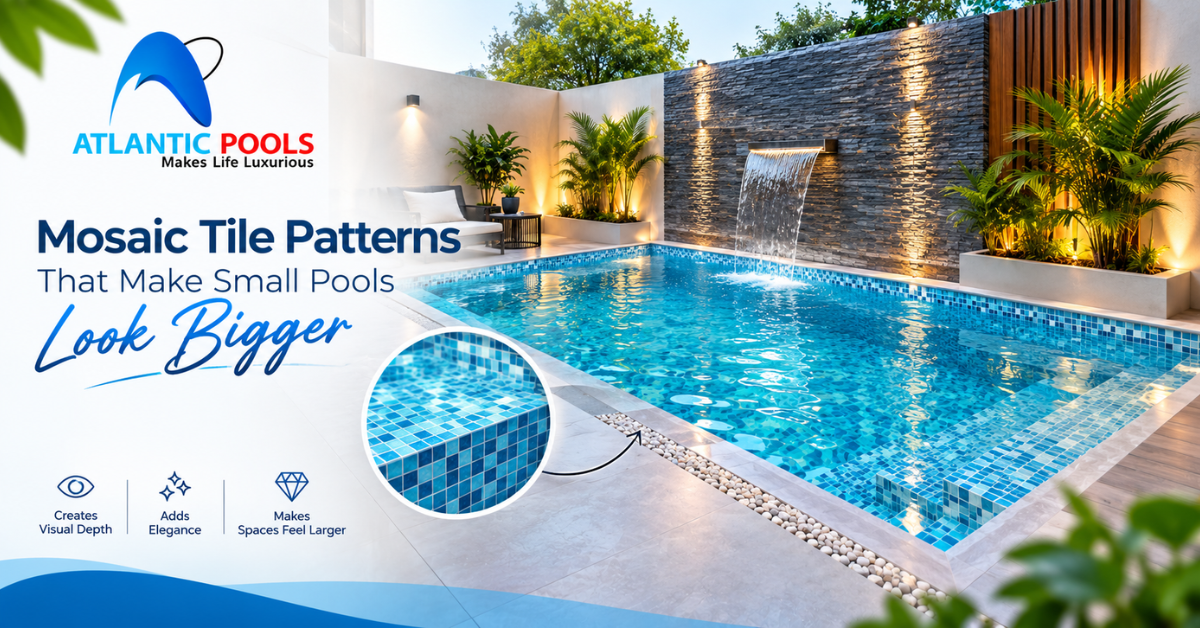
Glass mosaic tiles are the most popular premium choice for pools today, and for good reason. They’re non-porous, which means they resist staining and algae growth far better than porous materials, and their reflective surface creates the shimmering effect associated with high-end pools. Glass tiles also hold their color far longer than ceramic under constant sun and chemical exposure, making them a strong long-term investment despite a higher upfront cost.
Crystal Mosaic Tiles
Crystal mosaic tiles take the reflective quality of glass a step further, adding a distinctive sparkle that catches light beautifully across the water’s surface. They’re durable and water-resistant, and tend to be used as accent features or full-pool finishes on higher-end residential and hospitality projects where visual impact matters as much as performance.
Marble Mosaic Tiles
Marble mosaic tiles bring a natural, timeless aesthetic that many homeowners associate with luxury pool design. Their natural patterns and texture age gracefully, though marble is more porous than glass and needs proper sealing to resist staining and chemical wear over time.
Mural & Custom Mosaic Work
For pools where the tile itself becomes a design statement, mural mosaic tiles allow for detailed imagery and custom patterns across walls or feature areas. This is a specialised installation that combines artistic design with the same durability requirements as any other pool tile.
Ceramic & Porcelain Tiles
Ceramic and porcelain tiles remain a practical, cost-effective option, particularly for larger surface areas like pool decks and surrounds. Porcelain in particular offers excellent water resistance and a wide range of finishes, though it doesn’t match glass or crystal mosaic for underwater shimmer.
Comparing Swimming Pool Tile Materials
| Material | Durability | Water/Chemical Resistance | Visual Effect | Typical Cost |
| Glass Mosaic | Excellent | Very high — non-porous | Shimmering, vibrant | High |
| Crystal Mosaic | Excellent | Very high — non-porous | Sparkling, luxurious | High |
| Marble Mosaic | Good (needs sealing) | Moderate — porous | Elegant, natural | High |
| Ceramic/Porcelain | Good | High | Clean, matte or glossy | Moderate |
How to Choose the Right Tile for Your Pool
Match the Tile to Pool Usage
A private residential pool with light seasonal use has more flexibility than a high-traffic commercial pool, where constant bather load and chemical dosing put far more stress on tile and grout. Commercial projects generally benefit from glass or porcelain over more porous materials like unsealed marble.
Consider Long-Term Maintenance
Every swimming pool tiles decision comes with a maintenance trade-off. Glass and crystal mosaics need very little beyond routine cleaning. Marble mosaic work needs periodic resealing to maintain its resistance to staining. Factor this into your decision now, not after installation.
Balance Budget Against Lifespan
The cheapest tile option upfront is rarely the cheapest option over ten years. A porous, lower-grade material that needs replacing in five years usually costs more in total than a premium glass or porcelain tile that lasts fifteen to twenty.
Read More: Latest Swimming Pool Tile Designs in Lahore
Installation Factors That Affect Tile Lifespan
Even the best swimming pool tiles will underperform if installed poorly. A few factors worth confirming with your contractor:
- Proper substrate preparation — tiles applied over an improperly cured or uneven shell are far more likely to crack or delaminate.
- Correct grout selection — epoxy grout resists chemical exposure far better than standard cement-based grout in a submerged environment.
- Expansion joint placement — pools experience constant thermal movement, and tile work that doesn’t account for this will crack at stress points over time.
- Waterline tile height and slope — poor waterline planning leads to calcium buildup and staining that’s difficult to remove later.
Common Tile Selection Mistakes
- Choosing tile purely on showroom appearance, without checking its actual water absorption rating.
- Skipping professional grout selection, defaulting to whatever grout is cheapest rather than what suits a submerged application.
- Underestimating maintenance requirements for porous materials like natural stone.
- Ignoring slip resistance on deck and step areas, where safety matters as much as aesthetics.
Why Atlantic Pools
Atlantic Pools designs and installs the full range of swimming pool tiles — glass, crystal, marble, and mural mosaic work — matched to your pool’s usage, budget, and design goals rather than sold as a one-size-fits-all finish. Our tiling work is carried out alongside our broader landscaping and exterior design services, so your pool’s finishes and surrounding hardscape are planned as one cohesive project rather than disconnected add-ons.
You can see examples of our completed tile and mosaic work across various pool styles in our project gallery, where finished installations show how these materials perform in real Lahore conditions over time.
Contact Us Now To Get A Free Quote!
Final Thoughts
Swimming pool tiles are one of the few pool decisions that affect both how your pool looks and how long it lasts without major repairs. Glass and crystal mosaics offer the best long-term durability and visual impact for most projects, ceramic and porcelain provide a practical middle ground, and natural stone rewards proper maintenance with a timeless look. Whichever direction you choose, getting the installation details right matters as much as the material itself.
If you’re planning a new pool or considering a retiling project, get in touch with Atlantic Pools for expert guidance on the right swimming pool tiles for your space and budget.
FAQs
What are the best swimming pool tiles for durability?
Glass and crystal mosaic tiles offer the best combination of durability and chemical resistance, since they’re non-porous and hold their color under constant sun and chlorine exposure far longer than porous alternatives.
Are glass mosaic tiles more expensive than ceramic tiles?
Yes, glass mosaic tiles typically cost more upfront than ceramic or porcelain, but their longer lifespan and lower maintenance needs often make them more cost-effective over the life of the pool.
Do swimming pool tiles need to be sealed?
Porous materials like marble mosaic tiles need periodic sealing to resist staining and chemical wear. Glass and crystal mosaics, being non-porous, don’t require sealing.
What swimming pool tiles work best for commercial pools?
Glass mosaic and porcelain tiles are generally the strongest choice for commercial pools, since they hold up well under continuous chemical dosing and heavy daily bather traffic.
How long do swimming pool tiles typically last?
Well-installed glass or porcelain tiles can last fifteen to twenty years or more with proper maintenance. Lower-grade or improperly installed tile can require replacement within five to seven years.
Does Atlantic Pools install custom mosaic tile designs?
Yes. Atlantic Pools offers custom mural and mosaic tile work in addition to standard glass, crystal, and marble mosaic installations, tailored to your pool’s design and budget.