

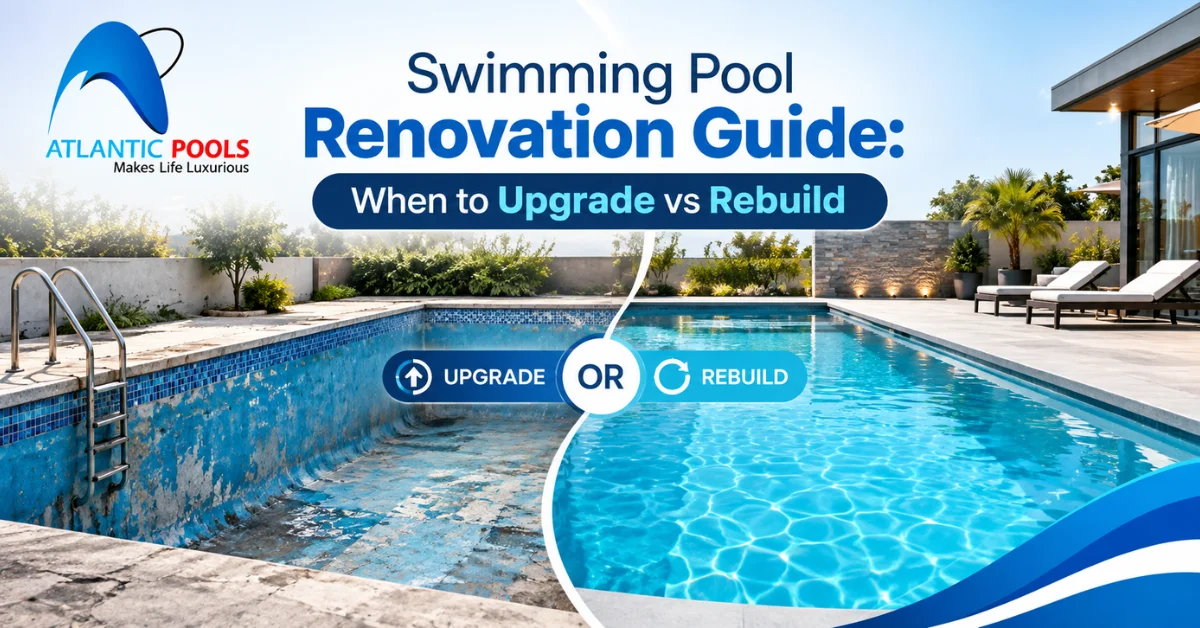
Most pool owners who call us about renovation start the conversation the same way, they’ve noticed a crack, some rough patches, or equipment that’s clearly on its last legs, and they want to know if this is a quick fix or the start of something much bigger. The honest answer depends entirely on what’s actually causing the problem, not just what it looks like on the surface.
We handle both ends of this, straightforward resurfacing and tile work through to full structural rebuilds, and the distinction between the two comes down to a handful of specific signs worth knowing before you call anyone.
According to Landmark Aquatic’s breakdown of repair versus renovation versus rebuild decisions, a single crack in an otherwise sound shell is a very different situation from cracking that shows up in multiple places, and renovation generally makes sense when the shell itself is still solid but the surfaces or equipment around it have simply aged out.
Surface Cracks vs Structural Cracks
This distinction matters more than almost anything else in this decision. Fine, shallow cracks limited to the plaster or finish are common as pools age and don’t usually signal a deeper problem, Alan Smith Pool Plastering’s guide to crack types describes these as surface cracks, addressed as part of a standard resurface. Structural cracks are a different category entirely, wider, sometimes with visible displacement on either side, and they indicate the shell itself has moved.
A structural crack that gets resurfaced over without being properly repaired first will telegraph straight through the new finish within months, which is why getting this diagnosis right before starting work actually matters.
Signs You’re Looking at a Renovation, Not a Rebuild
Rough, chalky, or gritty surface texture, dated tile that no longer matches current design trends, and mechanical equipment that’s become inefficient or hard to source parts for are all classic renovation situations. The shell underneath is fine, it’s everything layered onto it that needs updating.
Signs You Might Be Looking at a Rebuild
Cracks that keep widening or returning after patching, an uneven waterline, visible settlement around the pool, or rust bleeding through the surface all point toward something happening in the structure itself. In concrete and gunite pools specifically, long-term leaks can corrode the embedded steel reinforcement, and once that corrosion starts, sections of the shell often need to be opened up and rebuilt properly rather than patched.
Renovation vs Rebuild at a Glance
| Sign | Usually Means | Typical Fix |
| Fine surface cracks, no water loss | Cosmetic finish wear | Resurfacing |
| Rough, chalky, or stained surface | Ageing finish | Resurfacing or tile renewal |
| Ageing, inefficient equipment | Equipment lifecycle | Equipment upgrade |
| Widening or returning cracks with water loss | Structural movement | Structural repair, possible rebuild |
| Visible settlement or rust through concrete | Reinforcement corrosion | Partial or full rebuild |
What Renovation Actually Involves
A straightforward renovation usually means new tile and surface finishing, updated plumbing fittings where needed, and often an equipment upgrade alongside it. It’s a much shorter project than a rebuild, and the shell itself stays exactly where it is.
Equipment is frequently part of this conversation too. If your pump, filter, or heater is old enough that parts are getting hard to find, that’s usually the point where replacing it through our equipment supply service makes more sense than continuing to repair it piece by piece.
What a Rebuild Actually Involves
A full rebuild means treating the project the way we would any new pool construction job, structural assessment, reinforcement or demolition of the compromised sections, and rebuilding the shell properly before any surface work begins. It’s a bigger investment, but attempting to patch a genuinely structural problem repeatedly usually ends up costing more in the long run than addressing it properly once.
How to Avoid Needing Either, For a While Longer
A lot of renovation timelines get pushed back simply through consistent maintenance. Our tile maintenance guide covers the weekly habits that catch small surface issues before they turn into resurfacing jobs, and the same logic applies to catching a small crack before it becomes a structural one.
How We Approach This
We start every renovation inquiry with an actual inspection rather than quoting off a phone description, since the difference between a cosmetic fix and a structural one isn’t something you can diagnose accurately over a phone call. You can read more about how our team approaches projects on our about us page.
Contact Us Now To Get A Free Quote!
Phone: +92 300 1116713
Final Thoughts
Most pools showing their age need renovation, not a full rebuild, but the only way to know for sure is an honest inspection rather than a guess based on how bad the crack looks. Catching structural movement early keeps it a renovation instead of letting it become a rebuild.
If you’re not sure which one your pool needs, get in touch with us and we’ll give you a straight answer after taking a proper look.
FAQs
How do I know if my pool needs renovation or a full rebuild?
Surface cracks, dated tile, and ageing equipment usually point to renovation. Widening or returning cracks, visible settlement, or rust coming through the concrete usually point toward a structural rebuild.
Can a structural crack be fixed without rebuilding the whole pool?
Often yes, through targeted structural repair and reinforcement of the affected section, followed by resurfacing. A full rebuild is usually only needed when the damage is widespread or the reinforcement has significantly corroded.
How long does a pool renovation take compared to a rebuild?
A straightforward renovation is significantly shorter than a rebuild, since the shell stays in place. A full rebuild follows a similar timeline to new pool construction.
Is it cheaper to renovate or rebuild a pool?
Renovation is almost always cheaper upfront, but repeatedly patching a genuinely structural problem instead of addressing it properly often costs more in total than committing to the right fix the first time.
Do I need to replace my pool equipment during a renovation?
Not always, but it’s common to upgrade equipment at the same time if it’s ageing, inefficient, or hard to source parts for, since it’s a convenient point in the project to do so.
Does Atlantic Pools offer both renovation and full rebuild services?
Yes. We start with an inspection to diagnose what’s actually needed, then scope the project as a renovation or a full rebuild based on what we find, not a guess made in advance.