

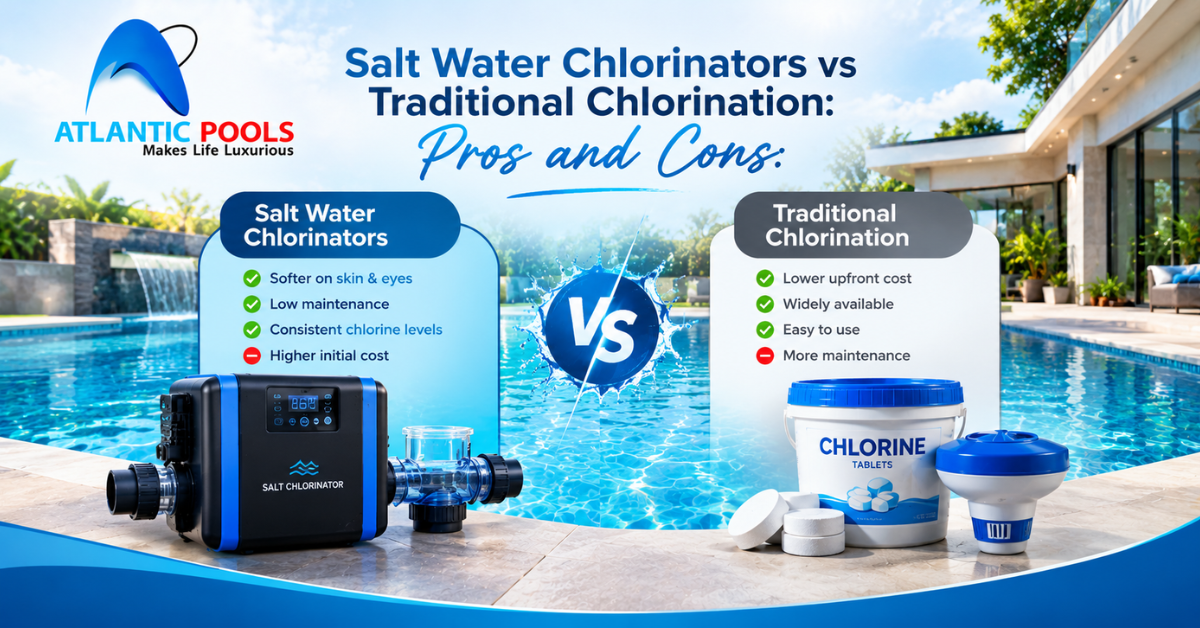
Salt water chlorinators get described as a chemical-free way to run a pool, and that’s the first thing worth correcting. A salt pool is still a chlorine pool. The difference is where the chlorine comes from, and that one change affects your weekly routine, your running costs, and even which materials you can safely build with.
We plan sanitation as part of the pool equipment on every project, and the question of salt water chlorinators versus traditional chlorination comes up often with clients building their first pool, usually after a friend has switched and either loved it or regretted it.
Here’s the basic fact. According to Blue Haven Pools’ breakdown of saltwater pools, a salt pool targets roughly 2,700 to 3,400 ppm of salt, about one-tenth of the salinity of the ocean, and the generator’s cell turns that salt into chlorine as water passes through it. Nothing about the sanitising itself is different, only the delivery.
How Salt Water Chlorinators Work
Pool-grade salt dissolves in the water, and as it circulates through the filtration system it passes through a cell fitted with electrically charged titanium plates. Electrolysis splits the salt and produces chlorine, which sanitises the pool and then reverts back to salt. Because the salt is recycled rather than used up, you top it up occasionally instead of buying chlorine constantly.
How Traditional Chlorination Works
With traditional chlorination, chlorine comes in as tablets, granules or liquid, and you add it yourself or through a dosing system. You test the water regularly, adjust the dose, and shock the pool when algae or heavy use demands it. It’s simple, proven, and cheap to start, but it means buying, storing and handling chemicals all season.
Salt Water Chlorinators: The Pros
Softer water and steadier chlorine
Because the generator releases chlorine slowly and continuously, levels stay steadier than the spikes and dips you get from manual dosing. Many swimmers find the water feels softer on skin and eyes, and the sharp chlorine smell is usually weaker, since a well-balanced salt pool produces fewer of the compounds behind that smell.
Less weekly chemical work
You still test and balance the water, but you’re no longer adding chlorine every few days or storing bulk chemicals at home. The CDC’s guidance on pool chemical safety is a good reminder of why that matters, since storing and mixing chlorine products is where many household accidents happen.
Lower chemical cost over time
Salt is cheap and available everywhere, so annual chemical spending usually drops compared with buying chlorine in bulk. That saving is what tends to pay back the higher upfront price over the years.
Salt Water Chlorinators: The Cons
Higher upfront cost and cell replacement
A generator costs more than a simple dosing setup, and the cell is a wearing part. Most cells last somewhere around three to seven years depending on water hardness, runtime and how well it’s looked after, and replacing one can be a meaningful expense. Plan for it from the start rather than being surprised in year five.
Corrosion and stone damage
Salty splash-out can corrode metal fittings and attack some natural stone over time, particularly softer coping and paving that isn’t sealed. This is the biggest practical downside and the one most worth designing around before the pool is built, not after.
pH tends to drift upward
Generators tend to push pH up, so you’ll still be testing and adjusting regularly. A salt pool is lower effort, not no effort, and it needs its stabiliser level watched too, especially in strong sun.
Salt Water Chlorinators vs Traditional Chlorination at a Glance
| Factor | Salt Water Chlorinators | Traditional Chlorination |
| Upfront cost | Higher (generator and cell) | Lower |
| Running chemical cost | Lower, mostly salt | Higher, ongoing chlorine purchases |
| Weekly effort | Less dosing, still test pH | Regular testing and dosing |
| Feel of the water | Softer, milder smell | Can feel harsher, stronger smell |
| Corrosion risk | Higher on metal and soft stone | Low |
| Long-term wear part | Cell replaced every 3 to 7 years | None |
Your Pool Materials Matter More Than You Think
If you’re leaning towards salt, material choices need to match it from the design stage. Glass and porcelain finishes handle salty water well, while soft natural stone is the risky choice. We compare how different finishes behave in our guide to glass mosaic vs ceramic tiles, and the same logic applies to coping and deck materials around a salt pool.
What Suits a Pool in Lahore
Lahore summers are long, hot and sunny, which means chlorine gets burned off quickly and the pump runs for many hours. A chlorinator only produces chlorine while the pump is circulating water, so it pairs best with a properly sized, efficient setup. Our guide to swimming pool pumps explains why, and why pump choice affects both running cost and how well a chlorinator performs.
A Simple Maintenance Routine for a Salt Pool
Salt pools aren’t set-and-forget, but the routine is short. Check salt level every month or so, and test pH and stabiliser weekly during the hot season. Keep the cell clean, since mineral scale on the plates cuts output and shortens its life, and top up with proper pool-grade salt rather than cheap salt with impurities. Most modern generators are self-cleaning, but they still need an occasional look.
It’s also worth watching the readings the unit gives you with a little scepticism. A generator’s salt sensor can drift, so a simple test kit every so often keeps you honest about what’s really in the water.
Thinking of Converting an Existing Pool?
Converting is often possible, but it deserves an inspection first. Older pools may have metal fittings, ladders, light niches or natural stone coping that won’t enjoy salty water. If those are in place, the fix is usually to replace or seal the vulnerable parts at the same time as installing the generator, rather than hoping for the best. Doing it as part of a wider upgrade tends to cost less than tackling each problem separately.
So Which Should You Choose?
If your budget is tight, you’re happy testing and dosing, or your pool already has natural stone and metal fittings you love, traditional chlorination is a perfectly sensible choice. If you want steadier water, less handling of chemicals, and you’re building with the right materials from day one, salt water chlorinators usually earn their extra cost. Neither one is the wrong answer, it’s about matching the system to the pool.
How We Approach This
We talk through sanitation during the planning of every pool construction project, because the choice affects materials, plumbing and equipment sizing. You can read more about our team on our about us page.
Contact Us Now To Get A Free Quote!
Phone: +92 300 1116713
Final Thoughts
Salt water chlorinators aren’t better or worse than traditional chlorination, they trade a higher upfront cost and some corrosion risk for steadier water and less hands-on work. The right choice depends on your budget, your materials and how much time you want to spend on the pool each week.
If you’re planning a new pool or thinking about switching, get in touch with us and we’ll help you weigh it up for your setup.
FAQs
Are salt water chlorinators chlorine-free?
No. They generate chlorine from salt through electrolysis, so a salt pool is still sanitised by chlorine.
Are salt water chlorinators cheaper to run?
Usually yes for annual chemicals, since salt costs less than buying chlorine regularly, but the generator costs more upfront and the cell needs replacing every few years.
How long does a salt chlorinator cell last?
Most cells last about three to seven years, depending on water hardness, runtime and how well the cell is maintained.
Can salt water damage my pool?
It can corrode some metals and soft natural stone over time, which is why materials should be chosen to suit a salt pool from the design stage. Glass and porcelain finishes handle it well.
Can I convert an existing chlorine pool to salt?
Often yes, but the pool should be assessed first, since metal fittings, natural stone and older equipment may not cope well with salty water.
Will Atlantic Pools help me choose between the two?
Yes. We discuss sanitation during equipment planning and recommend what suits your pool’s size, materials and budget.