

Almost every pool company claims to use quality materials and build to a high standard. It’s such a common line that it’s stopped meaning much on its own. What actually separates real pool construction quality standards from marketing language is whether a company can tell you the specific numbers behind that claim, concrete strength, reinforcement levels, and what gets tested before the water goes in.
We get asked about this a lot once clients start comparing quotes for pool construction, usually after noticing that two quotes claiming the same quality look very different on price. The difference almost always comes down to what’s actually specified underneath.
Concrete strength is a good example, and it’s more specific than most people expect. According to a detailed breakdown from Horizon Pool Supply on concrete strength standards, general building codes only require a minimum of 2,500 psi concrete, the same strength used for a sidewalk or driveway, while ACI 350, the standard specifically written for water-containing structures, requires a minimum of 4,500 psi. A pool poured at sidewalk strength is a common, quiet source of the cracking and rusting reinforcement that shows up a few years later.
Concrete Strength We Build To
We don’t build pool shells at driveway-grade concrete. Every shell is specified well above the general building code minimum, in line with the higher standard water-retaining structures actually need, not the lower bar that happens to be legally acceptable for a slab that never holds standing water against it day after day.
Structural and Water-Tightness Standards
Reinforcement matters as much as the concrete itself. Water-containing structures need tighter crack control than a standard building slab, since even hairline cracks in a pool shell are a path for water to travel through over years of constant exposure. This is the same underlying issue we cover when explaining the difference between cosmetic and structural problems in our renovation guide, and it’s far cheaper to specify this correctly during construction than to diagnose and repair it years later.
Materials Beyond the Shell
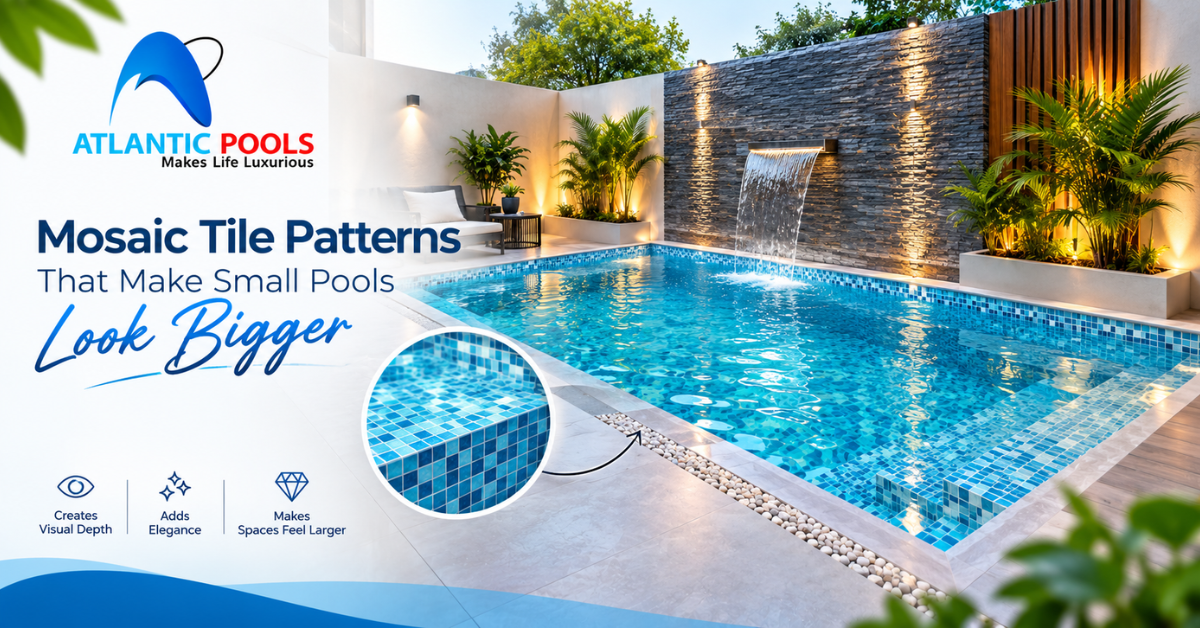
The same logic applies above the waterline. We use imported tiles and higher-grade finishing materials rather than the cheapest option that happens to look similar in a showroom, a standard we’ve written about in more detail in our piece on what makes a construction company genuinely large-scale. Materials like glass and crystal mosaic from our tile and mosaic work are chosen for how they hold up under years of chemical and sun exposure, not just how they photograph on day one.
What We Build To vs the Legal Minimum
| Element | General Minimum | What Pool-Grade Requires |
| Concrete strength | 2,500 psi (sidewalk grade) | 4,500 psi (ACI 350 water-retaining) |
| Reinforcement | Standard shrinkage/temperature steel | Higher reinforcement for crack control |
| Shell testing | Often skipped | Water-tightness testing before finishing |
| Equipment | Whatever is cheapest | Sized to volume, backed by warranty |
Testing Before Handover
A pool shell should be tested for water-tightness before any tile or finish goes over it, since coatings, plaster, and tile grout are not a waterproofing system on their own, they’re a protective surface layered on top of a shell that already needs to hold water without them. Skipping this test and finding out about a leak after the finish is applied turns a simple fix into a much bigger one.
Once construction is complete, we also test water flow and run the full equipment system before calling a project finished, rather than leaving that discovery to the client on their first swim.
Warranty and What It Actually Covers
Filtration systems, pumps, heaters, and lighting are supplied and installed with full warranty support, which matters more than it sounds. A warranty is only meaningful if the underlying equipment was sized correctly for the pool in the first place, otherwise it just becomes a repeated repair cycle covered by paperwork rather than an actual guarantee of performance.
Why Site Assessment Standards Matter
Every project starts with a site visit to check soil conditions, space, and access before any plan is finalised. Skipping this step is one of the most common reasons quoted budgets change mid-project, since ground conditions that weren’t properly checked upfront have a way of becoming expensive surprises once excavation starts.
How We Approach This
None of this is about being the flashiest option on paper, it’s about the numbers behind the claim actually holding up. You can read more about our team and approach on our about us page.
Contact Us Now To Get A Free Quote!
Phone: +92 300 1116713
Final Thoughts
Quality standards in pool construction aren’t really about a slogan, they’re about specific, checkable numbers, concrete strength, reinforcement, water-tightness testing, and equipment sizing that’s backed by an actual warranty. When you’re comparing quotes, asking for these specifics is a far better test than asking whether a company uses “quality materials.”
If you want a straight answer on what’s actually specified in your quote, get in touch with us and we’ll walk you through it.
FAQs
What concrete strength should a swimming pool be built with?
Water-containing structures should be built to at least 4,500 psi under ACI 350 guidance, well above the 2,500 psi minimum used for general concrete work like sidewalks and driveways.
Why does concrete strength matter so much for a pool?
Pools hold standing water against the shell constantly, unlike a slab or driveway. Lower-strength concrete is more prone to cracking and reinforcement corrosion over time under that continuous exposure.
Is a pool shell tested before the tile goes on?
It should be. A water-tightness test on the bare shell, before any coating or tile is applied, is the only reliable way to catch a structural leak before it’s sealed behind a finished surface.
Does equipment come with a warranty?
Yes, filtration, pumps, heaters, and lighting are supplied and installed with full warranty support, though the warranty is only as useful as the equipment sizing behind it.
Why is a site visit necessary before quoting a project?
Soil conditions and site access significantly affect what’s actually possible and what it will cost. Skipping this step is a common reason budgets shift once excavation begins.
How is Atlantic Pools’ approach different from a standard contractor?
We specify concrete and reinforcement above the general building minimum, test the shell for water-tightness before finishing, and back equipment with warranty support, rather than relying on materials that simply meet the legal minimum