

Glass Mosaic vs Ceramic Tiles for Swimming Pools
If you’re picking tiles for a new pool, you’ve probably already narrowed it down to two options sitting in front of you: a shimmering glass mosaic sheet, and a more familiar ceramic tile. Both look great in the showroom. The real question is how they hold up once they’re underwater, in direct sun, and getting hit with chlorine every single day for the next fifteen years.
We get asked about glass mosaic vs ceramic tiles constantly, usually right at the point a client is finalising their pool design. So instead of giving the usual vague “it depends” answer, here’s an honest, practical breakdown of what each material actually does once it’s installed.
What’s the Real Difference?
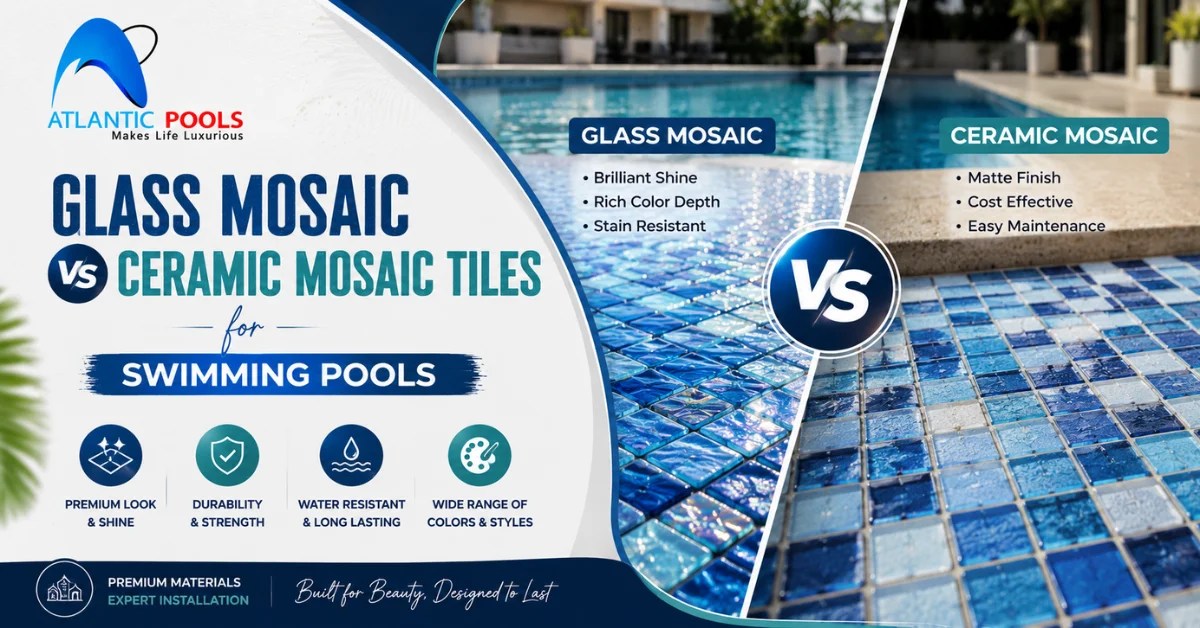
Glass mosaic tiles are small, individual glass pieces, usually 1 to 2 inches, set together to form a sheet that goes onto the pool wall or waterline. Ceramic tiles are larger, fired clay tiles with a glaze on top, and they’ve been the go-to choice for pools and bathrooms alike for decades because they’re familiar, widely available, and generally cheaper.
The core difference comes down to porosity. Glass is non-porous, meaning water and chemicals can’t get into the material itself. Ceramic tile has a glazed surface, but if that glaze chips or the grout around it fails, the underlying clay body can absorb water, which is where most long-term ceramic tile problems in pools actually start.
Glass Mosaic Tiles: What They’re Good For
Glass mosaics hold their colour for years, even with constant sun and chlorine exposure, because the colour is fused into the glass itself rather than sitting on a surface glaze. They’re also reflective, which is why pools finished in glass mosaic tend to have that shimmering, almost jewel-like look people associate with high-end builds.
The trade-off is cost. Glass mosaic runs noticeably higher per square foot than ceramic, both in material and in installation labour, since it’s a more detailed, time-consuming job to lay.
Practical Tip: If budget is tight, a lot of our clients use glass mosaic just on the waterline band and accent areas, then finish the rest of the pool in a more affordable material. You get the shimmer where it’s most visible without paying for it across the whole shell.
Ceramic Tiles: What They’re Good For
Ceramic tile is the more budget-friendly option, and for a lot of residential pools, that’s the deciding factor. It comes in a huge range of colours, patterns, and finishes, and it’s easier to source locally, which usually means faster procurement and lower shipping costs on larger projects.
The catch is durability in a submerged environment. Standard ceramic tile is more prone to chipping and cracking over time, especially around steps and edges where feet and pool equipment make contact most often. Once a chip exposes the clay underneath, water can work its way in, and that’s usually when you start seeing staining or, eventually, tiles coming loose.
Glass Mosaic vs Ceramic Tiles: Side by Side
| Factor | Glass Mosaic | Ceramic Tile |
| Water absorption | None, non-porous | Low, but glaze damage exposes clay |
| Colour retention | Excellent, colour is in the glass | Good, but can fade with UV exposure |
| Chip resistance | High | Moderate, chips expose raw material |
| Cost per sq ft | Higher | Lower |
| Installation time | Longer, detailed work | Faster, larger format |
| Typical lifespan | 15 to 20+ years | 8 to 12 years |
So Which One Should You Choose?
Honestly, it comes down to your budget and how long you want to go before thinking about retiling.
If you want the pool to look its best for the longest possible time and you’re not trying to cut corners on the finish, glass mosaic is worth the extra cost, especially for a pool you’re planning to keep for a decade or more.
If you’re working with a tighter budget, or this is a rental property or a pool you might renovate again in the next several years anyway, ceramic tile is a perfectly reasonable choice as long as it’s installed properly with quality grout and sealed edges.
A lot of our clients actually split the difference, glass mosaic on the waterline and any feature walls, ceramic or a more affordable material for the bulk of the pool body. It’s a good middle ground that still gets you that premium look where it matters most.
Installation Matters as Much as the Material
Whichever you pick, the tile is only as good as the installation behind it. A properly cured shell, correct grout choice, and attention to expansion joints matter more to how long your tiles last than most people expect. We’ve seen expensive glass mosaic fail early because of poor substrate prep, and cheap ceramic outlast it because it was installed carefully.
Where We Come In
We handle glass mosaic and marble mosaic tile work as part of our regular pool construction projects in Lahore, and we’re happy to walk you through samples of both glass and ceramic before you commit to either one. You can see finished examples of our tile work in our project gallery if you want a better sense of how each material actually looks once it’s installed and holding water.
Contact Us Now To Get A Free Quote!
Final Thoughts
There’s no universally “better” choice between glass mosaic vs ceramic tiles, it depends on your budget, how long you plan to keep the pool as-is, and how much upfront cost you’re comfortable with. Glass mosaic wins on durability and long-term looks. Ceramic wins on upfront cost and availability. Either one can work well in the right project, as long as the installation is done properly.
If you’re still deciding, get in touch with us and we can show you both materials side by side before you make the call.
FAQs
Is glass mosaic better than ceramic tile for pools?
Glass mosaic generally lasts longer and holds its colour better since it’s non-porous, but it costs more. Ceramic is more budget-friendly and works fine as long as it’s installed correctly with good grout.
How long do glass mosaic tiles last in a pool?
Well-installed glass mosaic typically lasts 15 to 20 years or more, compared to roughly 8 to 12 years for standard ceramic tile in a pool environment.
Can I mix glass mosaic and ceramic tile in the same pool?
Yes, and it’s actually a common choice. Many clients use glass mosaic on the waterline or feature areas and a more affordable material for the rest of the pool.
Why do ceramic pool tiles crack or chip more often?
Ceramic tile has a glazed surface over a clay body. Once the glaze chips, usually around steps or edges, water can get into the clay underneath, which leads to staining and eventually loose tiles.
Does grout choice matter as much as tile choice?
Yes. Epoxy grout holds up much better in a submerged environment than standard cement grout, regardless of whether you choose glass mosaic or ceramic tile.
Does Atlantic Pools install both glass mosaic and ceramic tiles?
Yes, we work with both, and we’re happy to walk clients through samples of each before they decide what fits their pool and budget.